Social media is no longer just a platform for entertainment. It has become a space where consumers discover brands, seek information, compare offers, and make purchasing decisions. In this context, posting content only occasionally is no longer enough. A well-thought-out social media strategy is now a real driver of growth.
A presence without a strategy: a poor investment
Many companies post regularly on Facebook, Instagram, LinkedIn, or TikTok without a clear objective. Posts are often made on a whim, without an editorial calendar or performance metrics.
The result is usually the same:
– limited organic reach;
– a limited commitment;
– an inconsistent brand identity;
– difficulties in measuring return on investment.
Conversely, a strategy provides clear direction for all social media activities.
A strategy helps set measurable goals
Before publishing any content, it is essential to define what the company actually hopes to achieve.
There can be multiple objectives:
– increase brand awareness;
– generate qualified leads;
– increase sales;
– build loyalty among existing customers;
– improve customer relations;
– recruit new talent.
Each objective requires specific content, formats, and performance metrics.
Getting to Know Your Audience Better
One of the main advantages of a strategy is a deep understanding of its target audience.
Who are your customers?
– How old are they?
– What social media platforms do they use?
– When are they online?
– What topics interest them?
– What problems are they trying to solve?
This information makes it possible to produce truly relevant content rather than communicating in a generic way.
Create content that adds value
Today, users are exposed to hundreds of pieces of content every day. To capture their attention, it’s no longer enough to just talk about your company.
An effective editorial strategy relies on a balance between different types of content:
– educational content;
– practical tips;
– Customer testimonials ;
– case studies;
– product or service demonstrations;
– company news;
– interactive content (questions, polls, quizzes).
This diversity helps keep the community engaged while strengthening the brand's expertise.
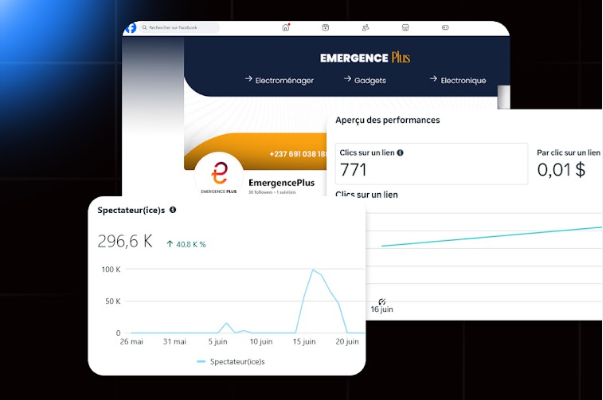
The Essential Role of Dashboards
A good strategy doesn't end with publishing content.
It also relies on analyzing results using dashboards.
The most closely monitored indicators include:
– the scope of the publications;
– the engagement rate;
– the number of subscribers;
– clicks to the website;
– conversions;
– the cost per acquisition for sponsored campaigns.
This data makes it possible to identify what actually works and to quickly adjust marketing efforts.
In other words, decisions are no longer based on intuition but on concrete data.
Optimizing Your Marketing Budget
Ad spending on social media is increasing every year.
Without a strategy, a significant portion of this budget risks being spent unnecessarily.
Regular performance analysis allows you to:
– to optimize advertising campaigns;
– to better target audiences;
– to improve return on investment (ROI);
– to identify the best-performing content.
This makes every euro invested more effective.
Strengthen the brand's credibility
Consumers place greater trust in companies that communicate regularly and professionally.
A consistent social media presence helps to:
– strengthen the brand image;
– demonstrate the company's expertise;
– put prospects at ease;
– build a lasting relationship with the community.
This consistency depends as much on the tone used as on the visual identity, the messages, and the frequency of posts.
Data to Support Decision-Making
Social media platforms now provide a significant amount of data.
Dashboards are particularly useful for answering key questions:
– What types of content generate the most engagement?
– Which formats convert best?
– Which social media platforms drive the most traffic?
– What are the best times to post?
– What is the profile of the most active users?
This information becomes a valuable tool for decision-making.
A Scalable Strategy
The social media landscape is constantly changing.
Algorithms are changing, new formats are emerging, and user expectations are evolving rapidly.
A successful strategy is therefore never set in stone.
It relies on ongoing performance analysis to adjust content, campaigns, and investments.
Conclusion
Social media is now an essential channel for increasing a company’s visibility and driving its growth. However, its effectiveness depends less on the frequency of posts than on the quality of the strategy behind them.
Setting specific goals, understanding your audience, producing relevant content, and tracking performance using dashboards are all key elements that can transform a simple online presence into a powerful driver of growth.
In an increasingly competitive digital environment, a well-designed social media strategy is no longer an option—it is a long-term investment in the company’s performance.